









3rd November 2023
Balnagown & Farming
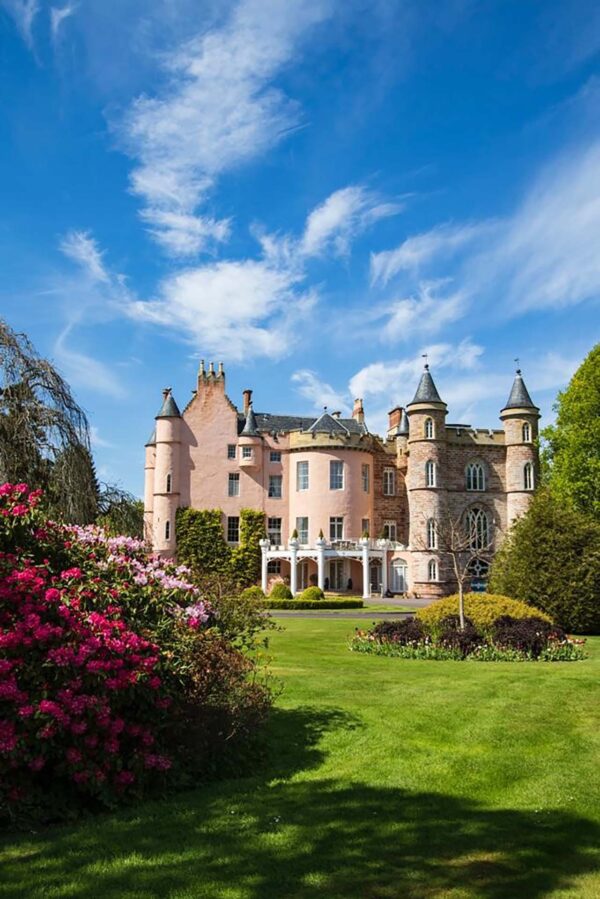
Ever since people first populated the Highlands and brought with them their farming practices, agriculture has shaped the landscape, the animal & plant life, and the culture. Balnagown has been no different. Across the estate we can see evidence of all the major changes in agriculture over the millennia; from the first settlers who were clearing the forests and erecting their stone monuments at Edderton, to the Bronze Age broch makers in Glen Cassley and the Iron Age fort builders at Scotsburn.

Societal structures such as Feudalism made its mark upon the estate and the country, as did the improvements brought about by the agricultural revolution and indeed the individual landowners and Lairds themselves.
One such Laird was John Lockhart Ross, the eighteenth Laird. By the time he inherited Balnagown he had already had a successful naval career and was a member of parliament for Linlithgow. He was a man of the future and was described by the English writer, Thomas Pennant, as “the best farmer and greatest planter in the country; his wheat and turnips showed one and his plantation of a million pines the other.” He is remembered as a benevolent landlord but also as a reformer whose innovations changed not only the landscape, and agricultural face of the area, but also helped bring about the end of what was considered the traditional Highland way of life.


It was the period post WW1, however, that Balnagown and the country as a whole began to see a substantial increase in both the intensification and use of mechanisation in farming methods, and subsequent and fundamental changes to the landscape as a whole.
Sir Charles Ross, the then Laird, was a man fascinated by modern ways. He was described as a man of “extraordinary vigour and inventive genius”. He is well-known for his interest in rifles, but less known is his interest in modern farming methods. He had both a millrace and workshop built opposite the castle on the other side of the river. It was here that he experimented with various types of agricultural implements. The library at the castle still contains many of his technical works. Sir Charles was so impressed by the new Caterpillar tractors that he immediately invested in one becoming one of the first people in the Highlands to do so. The estate’s interest in agricultural improvements and intensification increased all the way up and in to the 1990’s, driven then by the production-based subsidies and minimum pricing.


Managing The Land
Balnagown is roughly 39,000 acres and spans the country from the shores of the Cromarty Firth to within five miles of the west coast. The landscape changes as it makes its way west, and inevitably so does the agricultural use of the land. The picture is an interesting and varied one, but not untypical of large Highland estates. The land itself varies from fertile fields laden with crops, to areas given over to livestock farming, to huge swathes of forestry and to wild & open, rough hill land.
How the estate manages each of these very different areas changes not only according to the nature of the land but also according to their own complexities and indeed their own history. Farming an area of land according to its nature is par for the course, but according to its history warrants more explanation.
The estate directly manages the vast majority of its holdings, however, it does choose to rent out some of its acreage as landowners do across the world. It leases out a variety of entities from single paddocks to whole farms with properties and outbuildings. In addition, the estate also manages land through contract farming, hereditary tenancies, and crofting.
Crofting as a form of tenure (rental) was a response to a historical need in the Highlands and Islands of Scotland and is unique to it. It stems from a requirement to give security and protection to people living on the land after the Highland Clearances of the early 19th century. Crofts were traditionally small areas of land, often only a few acres, where people could build a house and raise some crops or livestock to supplement their living which would often be in fishing, forestry, estate work, or local industries such as potash production or charcoal making which both had periods when they were significant businesses in the Highlands. For more information on crofting please go to: www.crofting.scotland.gov.uk/what-is-crofting

Farming, Sustainability and Working with Nature – The Way Forward
Historically, as with farms all over the world and at its most basic, farmers and estate owners produce what suits their land and what is going to generate the most profit. In the UK there has also been the idea that alongside the need for farmers to provide an income for their family is the concept of them as caretakers of the land. This, of course, isn’t true of all farmers or indeed all of the time, but as we come to terms with the fact that we have entered a period of global warming producing extreme weather conditions, and as modern human behaviour has had an unprecedented and detrimental impact on our environment, sustainability and care of that natural environment has been pushed to the forefront of every farmer and estate owner’s mind.
To date the estate’s in-hand farming enterprise, which comprises nearly 600 acres, has been run largely along conventional lines, with our arable land growing spring barley for whisky distilling, along with winter wheat and oil seed rape in rotation with potatoes.


Over the past 2 years at Balnagown we have been moving our farming operations more towards a regenerative and sustainable form of agriculture with the main aim being to try to naturally improve our soils and to work with nature, wildlife, and the environment.
Good healthy soil is the basis of all food production. By looking after our soils, we aim to increase soil organic matter and soil biodiversity. This will in turn help us to reduce our reliance on chemical fertilisers, whilst capturing carbon, and mitigating against floods and droughts.
One of the first significant projects that we have undertaken to improve and protect Balnagown’s soils is to re-establish a cattle herd on the estate and use them to graze both the arable land as well as the woodland. Having our own cattle allows us to put clover/grass leys back into our arable rotations, which captures nitrogen and improves soil fertility. At the same time the roots of both the clover/grass and cattle dung increase the soil’s organic matter. The other significant benefit of keeping livestock is that it allows the Estate to increase the amount of land we can keep covered (with crops) throughout the winter. This means is that the soil is protected from winter’s wind and rain and the inevitable soil erosion it brings.


We have some exciting changes coming up as part of our farm management program over the coming 5 years which will include:
- introducing green manures that will be grown specifically to be ploughed into the soil to increase fertility and organic matter
- planting wild bird seed, instituting grass margins and brassica buffer strips along water margins to reduce diffuse pollution as well as providing habitat and food for insects, birds and mammals
- planting about 2500m of hedging across the arable landscape to increase our capacity to utilise the land for livestock as well as create green pathways between habitats
- managing areas of our grassland for wading birds and floral biodiversity through timed grazing and mowing, as well as creating small wetland areas in these fields
- fencing a 40ac area of woodland for cattle overwintering. This will help to protect the arable soils through the winter while improving habitat specifically for two rare butterflies found on the estate.
The estate views it as exciting times when we have the opportunity to restore, improve and secure our small part of the environment for the future. There are challenging times ahead though of which the estate is more than aware. The changes in farm support following the UK leaving the EU, the ongoing climate and biodiversity crisis’s, rampant food inflation and competing demands for land for forestry, rewilding, and renewables, means the requirements expected from the agricultural land at Balnagown will continue to change and evolve over the coming decades and impact the country’s landscape as a whole. Hopefully the estate’s current programme will help the estate meet and overcome these challenges on the best footing possible. It would be interesting see how the landscape will look centuries from now and how future generations judge us.
