












3rd September 2026
Herb Paris
First Recorded Sighting of Rare Woodland Plant Confirmed on Balnagown Estate

A Rare Woodland Discovery
Balnagown estate can now confirm that the sighting of the rare woodland plant by botanist and ecologist James Rainey was found in the northern part of the estate. Rainey spotted the plant in a beech copse situated in a ravine in Sutherland. The initial sighting was made in 1999, and this year was confirmed by Botanical Society of Britain & Ireland (BSBI).
Herb-paris also known as True Lover’s knot and more formally Paris quadrifolia is typically found in damp and shady, chalky or limestone woodlands. It is regarded as an exquisitely pretty plant that when it flowers produces a single star-shaped yellow blossom with a central dark ‘berry’.
Its appeal lies mainly in its physical appearance as the plant does not hold any nectar and is completely scentless. The berry itself is repulsive taste and is in fact poisonous as all parts of the plant contain solanine, a glycoalkaloid poison.


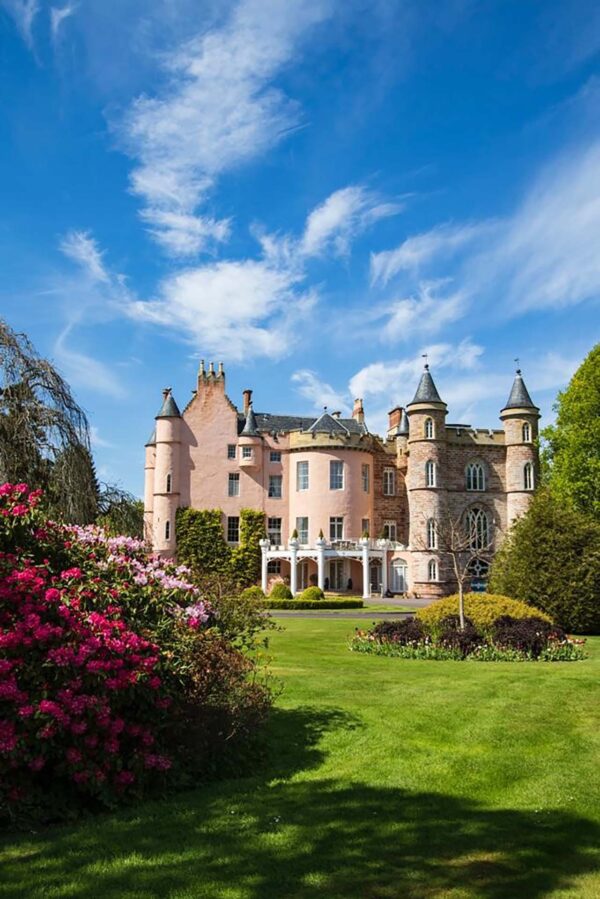
The Estate is utterly delighted that another rare species, and such a particularly pretty one, has been found within its boundaries. Such knowledge helps us plan our land management strategies and ensures that we protect all the various habitats within it. If anyone spots anything interesting do let us know.
Callum Paterson, Estate Manager
Why This Discovery Matters
The plant is regarded as a rare find; the last one was recorded in Northern Scotland since 1971. The scarcity is mainly down to three factors, the loss of ancient woodland of which it is an indicator, traditional woodland management techniques to which it had adapted and its own biology. The plant only produces one seed when it flowers in May. It is presumed that Herb-paris is either self-pollinated or wind-pollinated
The BSBI, who verified the plant, said that “it was a remarkable find and shows that there is still a lot we have yet to find out about the plants that grow in the wilder parts of northern Scotland.”
Herb-paris is more common in England, where it seemly appears to prefer the eastern side of the country it is, however, in decline. It can also be found throughout Europe and northern Asia.


For more information on Balnagown estate please email the estate office on 01862 843601.
